
- High-speed trains and express buses are often the best way to get around the country
- Foreign map apps don’t work in South Korea, so you’ll need to use the local version—Kakao Map or Naver Map
- Enjoy the cuisine with large family-style dishes and be prepared to cook your own food at the table
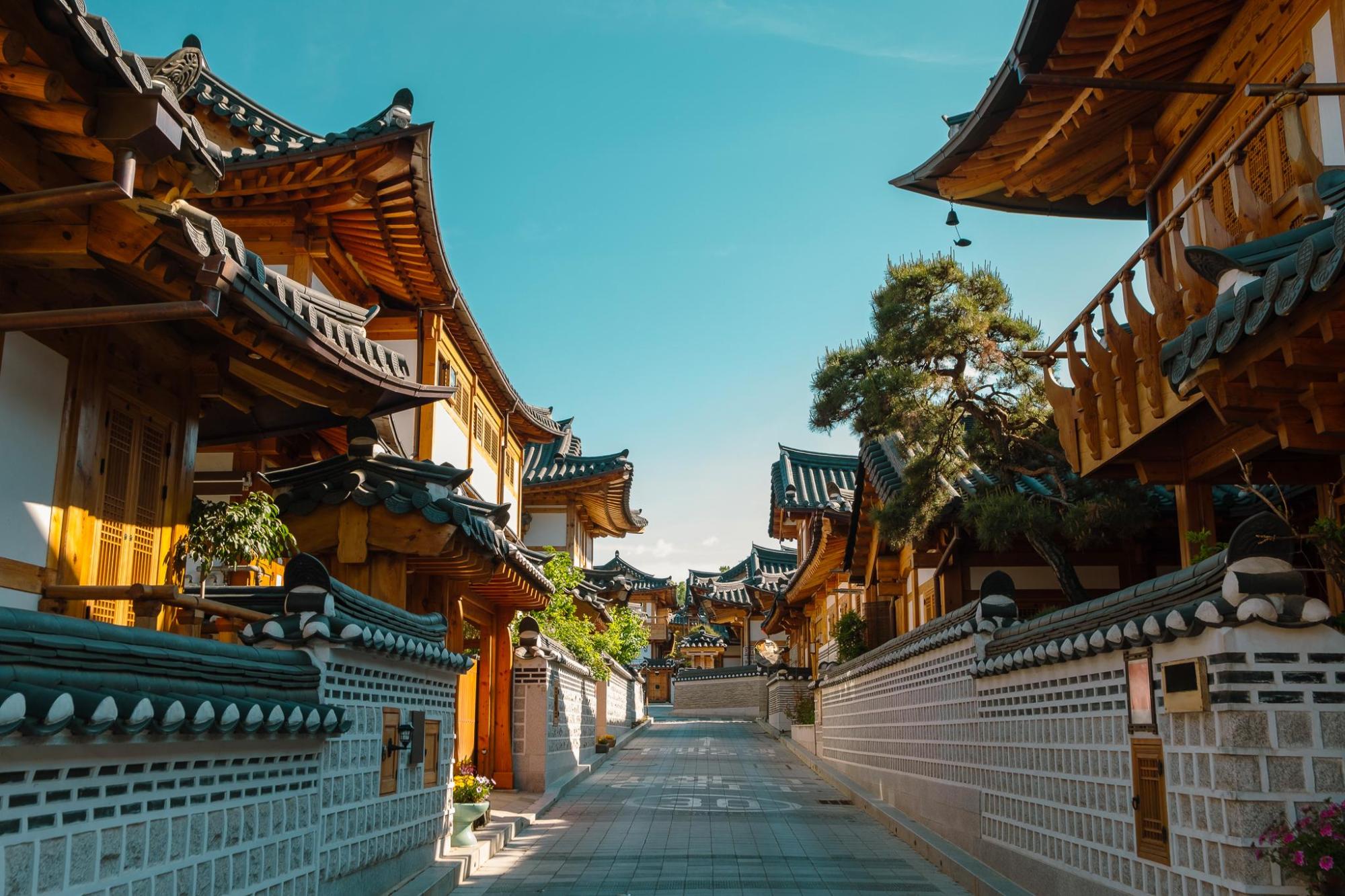
It may be known around the world for its K-Pop and K-Dramas, but visiting South Korea will show you there’s much more than its modern culture. From grand palaces to mountain monasteries, there are ancient fortresses, national parks, and coastlines.
Although it’s an efficient country, there are important things to know before traveling to South Korea, especially as your usual tech apps might not work, and you’ll need to navigate some unique customs for transit and dining.
When to visit South Korea
With a humid summer and a very cold winter, the best time to visit South Korea tends to be in the milder months.
Spring: peak
With the weather warming up and the cherry blossoms blooming, one of the most popular times to visit South Korea is the spring (March through early June). It’s generally dry, and the temperature is pleasant for outdoor activities, with greenery throughout the country.
It’s the busiest time of the year for visitors, so it’s worth booking in advance.
Summer: off-peak
It’s hard to avoid the heat and the humidity during summer (late June through August), when there are also more chances of rain. While the weather can be warm and humid, it also means fewer crowds, so there’s lots of availability for accommodation and lower prices.
It can be a good time to visit Seoul, where many of the activities are indoors. Locals tend to head to the beaches or the mountains, so you’ll find lots to do there.
Fall: peak
During the months of fall (September through November), the weather is normally at its best with long dry and warm days. It’s an excellent time to explore South Korea’s smaller towns and natural sights, with the vibrant reds and yellows of the leaves.
October is when lots of festivals are held across the country, which can be fun to attend but also fill up hotels.
Winter: off-peak
Winter (December through February) is very cold and the days are short, so it’s not a great time to visit if you want to spend most of the time outdoors, with the exception of the country’s ski fields in Gangwon-do.
But there’s still lots happening in major cities even though prices for accommodation and tours generally drop. Winter can be a good time to focus on the cultural sights and the food scene.
How long to stay in South Korea
The country’s high-speed railway makes it easy to visit multiple destinations, even on shorter trips. With just a week in South Korea, you’ll be able to spend a few days exploring Seoul, a couple of days in historic Gyeongju and also see Busan.
A 10-day South Korea itinerary allows you even more time to see some of the smaller sights between the main cities, or perhaps fly to Jeju Island for a few days.
If you can spend two weeks in South Korea, that’s enough time to get an excellent overview of the country, exploring the cities, Jeju Island, and some lesser-visited areas like the folk village of Andong or the culinary capital of Jeonju.
How to get around South Korea
There’s a lot to see in South Korea, but the country’s excellent transportation systems make it easy to get between the highlights.
High-speed railway
One of the best ways to move between major cities is via the high-speed trains, which are efficient and punctual, with modern trains equipped with free Wi-Fi and comfortable seats.
The main high-speed train operator is called KTX, with five lines across the country that can take you between Seoul and Busan in less than three hours. A competing company called SRT offers a similar service but has only two lines, reaching fewer destinations than KTX.
Buses
For destinations where there isn’t a train line, South Korea’s comprehensive bus system is an excellent alternative. There are two types of long-distance buses, which may leave from different terminals in some cities:
- Express buses: They use the highway to go directly between large cities.
- Intercity buses: They make multiple stops, including at some smaller towns.
You can buy a ticket at a kiosk at the station or online in advance. Using an express bus is about half the price of a high-speed train, although the trip generally takes about twice as long.
Rental car
A wonderful way to explore more of South Korea is by renting a car in Seoul and driving around the country. This makes it easier to visit places like national parks, mountain monasteries, and historic villages.
Most visitors will need an International Driving Permit (IDP) alongside a full driver’s license. Roads in South Korea are generally very good, and traffic is generally manageable outside of peak periods.
Domestic flights
Because it’s so easy to travel by train or bus between South Korea’s main cities, domestic flights across the mainland are not a common way for tourists to move around the country.
However, there are lots of flights to Jeju, and it’s usually the best way to travel to the island, with direct connections from cities like Seoul and Busan. The flight takes just over an hour, and tickets can be cheaper during off-peak times.
Where to stay during your trip to South Korea
Other than Seoul, there are some key destinations where you might like to stay in South Korea to see the sights and explore the surrounding region.
- Busan: The second-largest city in the country, the beaches and harbor offer a more relaxed energy than the capital, with seafood markets and coastal walks.
- Gyeongju: Sometimes called a “museum without walls,” this ancient capital is full of historic sites, including temples and royal burial mounds
- Jeju Island: Off the southern coast of the mainland, the island has a vacation vibe with resort areas and a dramatic volcanic landscape.
- Jeonju: A smaller city with beautiful historic neighborhoods, it’s also famous as the culinary capital of South Korea.

Essential things to know about South Korea
Once you understand some of the important differences in technology and local customs, visiting South Korea can be a breeze. These South Korea travel tips will help you make the most of your time.
K-ETA or electronic arrival card?
Before traveling to South Korea, some passport-holders will need to apply for a K-ETA (Korea Electronic Travel Authorization), which is similar to a visa waiver. Check if this applies to you and, if so, be sure to complete the application online at least 72 hours before flying.
If you hold a passport that doesn’t require a K-ETA, you will still need to fill out an electronic arrival card before you reach immigration. This can be done even after you land in South Korea.
Most nationalities no longer need a Q-Code, which was an electronic health declaration. However, arrivals from some areas experiencing outbreaks may still need one.
Google and Apple Map apps don’t work
Due to national security laws, foreign companies aren’t allowed to store South Korean mapping data, which means common apps like Google Maps and Apple Maps don’t work very well in the country.
For any kind of navigation—including walking, driving, and public transportation—you can use one of the local apps. The two most popular options, which both have English-language support, are Naver Map and KakaoMap.
T-Money card
If you’re planning to use public transportation when you’re in South Korea’s cities, you’ll find the T-Money card is very useful. It’s a rechargeable smart card that you can get from a convenience store or airport arrivals hall.
Tapping the T-Money card when you get on local buses and trains is much easier than trying to have exact change each time. You can also use the card for taxis and for some stores and restaurants. But one catch is that the T-Money card can only be topped up with cash, so keep an eye on your balance if you’re not carrying much cash.
Taxis and Kakao T
Taxis are a convenient and relatively affordable way to get around the cities and towns of South Korea, and you are often able to flag them down on the street. However, it’s more common for people to use the Kakao T app to book a taxi. For visitors, it has the advantage of no language barriers and an estimated fare.
Translation technology
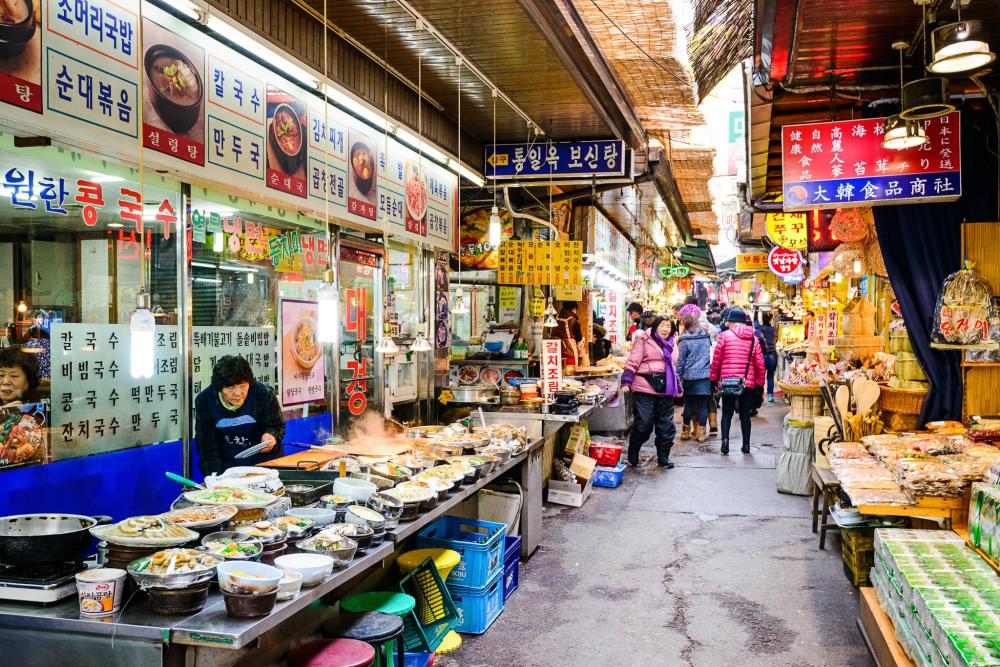
Although it’s becoming more common for people in South Korea to speak some English, many stores and restaurants won’t have English signs or menus.
A convenient way to solve this issue is to use a translation app with a camera function. Just scan the menu with your phone’s camera and it will instantly turn the Korean script into English.
Restaurants
A highlight of visiting South Korea is trying its rich cuisine—but there are some things to know about how restaurants generally work.
Firstly, many meals are served family-style, and many places only have large sharing dishes on the menu. If you’re dining alone, you may find some restaurants don’t have single-serve options. At barbecue restaurants, you will likely cook the food yourself at the table.
When you need service, look for a call button on the table. And when you’re done, most restaurants will expect you to take your table number to the cashier at the entrance and pay there.
Tipping
South Korea has a strict no-tipping culture. Whether it’s a taxi, a haircut, or a restaurant, the price on the bill is exactly what you pay. Leaving extra money on the table may cause confusion.
The exception is tour guides, who will not expect a tip but will not be offended if one is offered. In that case, between ₩10,000 and ₩20,000 per day is acceptable.
Showing respect
When it comes to local behavior, there are a few things to know before going to South Korea:
- For instance, when giving or receiving anything, always use both hands to show respect. When greeting someone, a slight bow of the head is the best way to say hello or thank you.
- On public transportation, it’s polite to keep your voice down and not talk loudly, while you should also be mindful of leaving the priority seats available.
- When riding the escalators, stand on the right side and walk on the left. When eating, never leave your chopsticks pointing up from a bowl of rice because that represents death and is considered very rude and unlucky.
Taking off your shoes
As with many countries in Asia, there will be times in South Korea when you need to take off your shoes. It’s common when going to the inner part of a temple, but also if you’re staying at a traditional hanok guesthouse or for floor-seating at a restaurant.
There will normally be a shoe rack at the point where you’re expected to take them off, so leave your shoes there and put on any slippers provided. Make sure you’re wearing socks because walking barefoot indoors is considered impolite.
Trash
When you’re visiting South Korea, you may soon notice there are very few public trashcans. In many places, you’ll be expected to carry things like wrappers and empty coffee cups back to a hub like a subway station—or even to your accommodation.
Whether in public or an accommodation, there are usually multiple trashcans for you to sort the recycling. Locals take recycling very seriously, so try to follow the rules that are written on the trashcans.
Top things to do when visiting South Korea
There are lots of things to do in South Korea, and these highlights give you a good taste of the variety of experiences on offer.
- Gyeongbokgung Palace: This is the largest of five grand palaces in Seoul that show the opulence of the Joseon dynasty.
- Gamcheon Culture Village: This colorful neighborhood is on a steep hillside in Busan, and is full of eclectic street art and fun coffee shops.
- Bulguksa Temple: In the forest just outside Gyeongju, this incredible temple complex is listed as a World Heritage site.
- Mount Hallasan: Dominating the center of Jeju Island, the country’s highest peak has scenic hiking trails and panoramic views.

South Korea travel tips: Hidden gems
Beyond the best-known attractions in South Korea are many more places that offer an even deeper insight into the country’s story.
- Hahoe Village: Set on a beautiful river near Andong, this traditional folk village has preserved its architecture and rich cultural traditions.
- Haeinsa Temple: Along with the gorgeous architecture of the complex, you can see ancient Buddhist scriptures carved onto 80,000 wooden blocks.
- Pohang Space Walk: Follow the path along this enormous steel sculpture resembling a rollercoaster for views over the coastline.
- Seoraksan National Park: Known for its dramatic and jagged peaks, this mountainous reserve is full of adventure and gorgeous scenery.

In South Korea, technology is your friend
The excellent transit system across South Korea and in its cities makes it efficient to get around, but remember, you’ll need a local map app because foreign ones don’t work. Once you have it installed, the instructions for driving or public transportation are accurate, so don’t be afraid to explore beyond.
Using a translation app will also help you get the most from your dining experience, by being able to scan and translate menus. When you’re visiting South Korea, you’ll find the food is as much of a highlight as the scenery and historical cultural sights.
Disclaimer: The views and opinions expressed are those of the author and don’t necessarily reflect the official policy or position of our company.