
- A higher-speed train connects many of Malaysia's main destinations, but renting a car is a good way to reach smaller towns
- While Malaysia is a Muslim-majority country, you can still buy alcohol at supermarkets, bars and some restaurants
- Some of the most popular experiences in Malaysian Borneo limit visitor numbers so you may need to book in advance
Malaysia is a fascinating destination, offering city breaks in places like Kuala Lumpur and tropical escapes on islands like Langkawi. Travelling around the country is generally easy and affordable, especially in the most popular destinations. There are also lots of areas that still feel adventurous, whether it’s the depths of the jungle or the heights of Mount Kinabalu.
Whether you're planning to travel through Peninsular Malaysia (the mainland region) or Malaysian Borneo (home to Sabah and Sarawak on the island of Borneo) our guide will help you plan your trip, with some top Malaysia travel tips for what to see and how to get around
When to visit Malaysia
In general, Malaysia has two seasons: dry and wet. However, the dates for those seasons vary across the country, so planning ahead can help you make the most of your trip.
West Coast
The west coast of Peninsular Malaysia is where you'll find popular cities like Kuala Lumpur and Malacca, as well as islands like Penang and Langkawi. The peak time to visit is from December to February, with perfect beach weather on the islands. June to August is also generally dry but isn't as crowded.
Prices are generally lower in the shoulder seasons from March to May and September to November, but the rain means you may prefer to focus on the cities than the islands.
East Coast
The east coast weather of Peninsular Malaysia is almost the direct opposite to the west coast. For destinations like Tioman Island or the Perhentian Islands, the dry season is between March and September, with the busiest months in July and August.
During the monsoon season, many tourism businesses like ferries and accommodation close down, so it can be hard to visit the east coast islands from November to February.
Borneo
The best time to visit Malaysian Borneo is during the drier months between March and September. It will be hot and humid, but the sunny days are perfect for trekking or wildlife experiences. July is particularly busy with lots of festivals and it's worth booking accommodation in advance.
In the shoulder months of February and October, you may still find mild weather but without the crowds. November to January is generally the wettest period and the heavy monsoons can make some activities quite difficult.
How long to stay in Malaysia
Ultimately, planning how long to spend in Malaysia depends on where you want to visit:
- For a trip that focuses on the key mainland destinations like Kuala Lumpur, Malacca, Penang or Langkawi, one week is a good minimum time to get a taste of a few places. Between one and two weeks will allow you to see a few more highlights and spend a few days relaxing on an island.
- In the two Borneo states of Sabah and Sarawak, getting around takes a little longer and some of the best experiences need a full day or more. It's a good idea to give yourself at least a week per state.
To cover most of the top sights across both parts of Malaysia, you'll need about three weeks.

How to get around Malaysia
There are several convenient ways to get around Malaysia, with various parts of the country better suited to specific modes of transport.
Car hire
A great way to get around Malaysia is by hiring a car, particularly on the mainland, where modern highways connect many of the main cities.
In Malaysian Borneo, the new 2000-kilometre Pan-Borneo Highway is making it easier to drive around (and between) the two states, although many parts are still under construction. The rough terrain in Sabah and Sarawak means you’ll likely need a 4WD for the roads.
Most visitors require an International Driving Permit (IDP) to rent a car in Malaysia and driving is on the left hand side of the road.
Trains (KTM and ETS)
Across Peninsular Malaysia, two primary rail networks offer convenient connections between many of the main destinations.
The KTM West Coast line goes between Padang Besar on the Thai border and Johor Bahru, which connects to Singapore. It passes through cities like Butterworth (the gateway to Penang), Ipoh and Kuala Lumpur. Whereas the KTM East Coast line runs between the towns of Gemas and Tumpat.
There are no trains in Malaysian Borneo, other than the historic Sabah State Railway, which is more of a scenic experience than a convenient way to get around.
Premium coaches
For areas that are not serviced by train, premium long-distance coaches provide a convenient public transport option.
In Malaysian Borneo, the public bus network is not as comprehensive but there are routes between most of the main destinations. There may be only a few departures each day, so it's a good idea to book tickets in advance.
Ferries and river boats
If you're visiting any of Malaysia's smaller islands, you may need to catch a ferry from the mainland. From Peninsular Malaysia, this may include the ferry to Langkawi (although the island also has an airport), as well as the Perhentian Islands and Tioman Island on the east coast.
In Sabah, boats are used to reach offshore islands like Sapi, Manukan and Mamutik.
And in Sarawak, longboats and express boats are common ways to get around more remote parts of the region because they're able to travel down the wide rivers, which act as highways, to reach towns that have limited road access.
Domestic flights
Within Peninsular Malaysia, domestic flights are less common because many of the main destinations are well connected by higher-speed rail or express buses. But the routes between Kuala Lumpur and the islands of Penang and Langkawi are a popular way to save time.
Flying is the main way to get between Borneo and Peninsular Malaysia, with various flights a week between Kuala Lumpur and the two main Borneo cities of Kota Kinabalu (Sabah) and Kuching (Sarawak).
Because the main highway between Sabah and Sarawak is physically separated by the country of Brunei, flights are also a very common way to get between the two regions to avoid the delay of cross-country immigration checks.
Where to stay during your trip to Malaysia
Other than Kuala Lumpur, there are some key destinations where you're likely to stay when you're visiting Malaysia.
- Penang: the main city of George Town puts you right amongst the bustling food and cultural scene, but there are also beach areas on the island as an alternative.
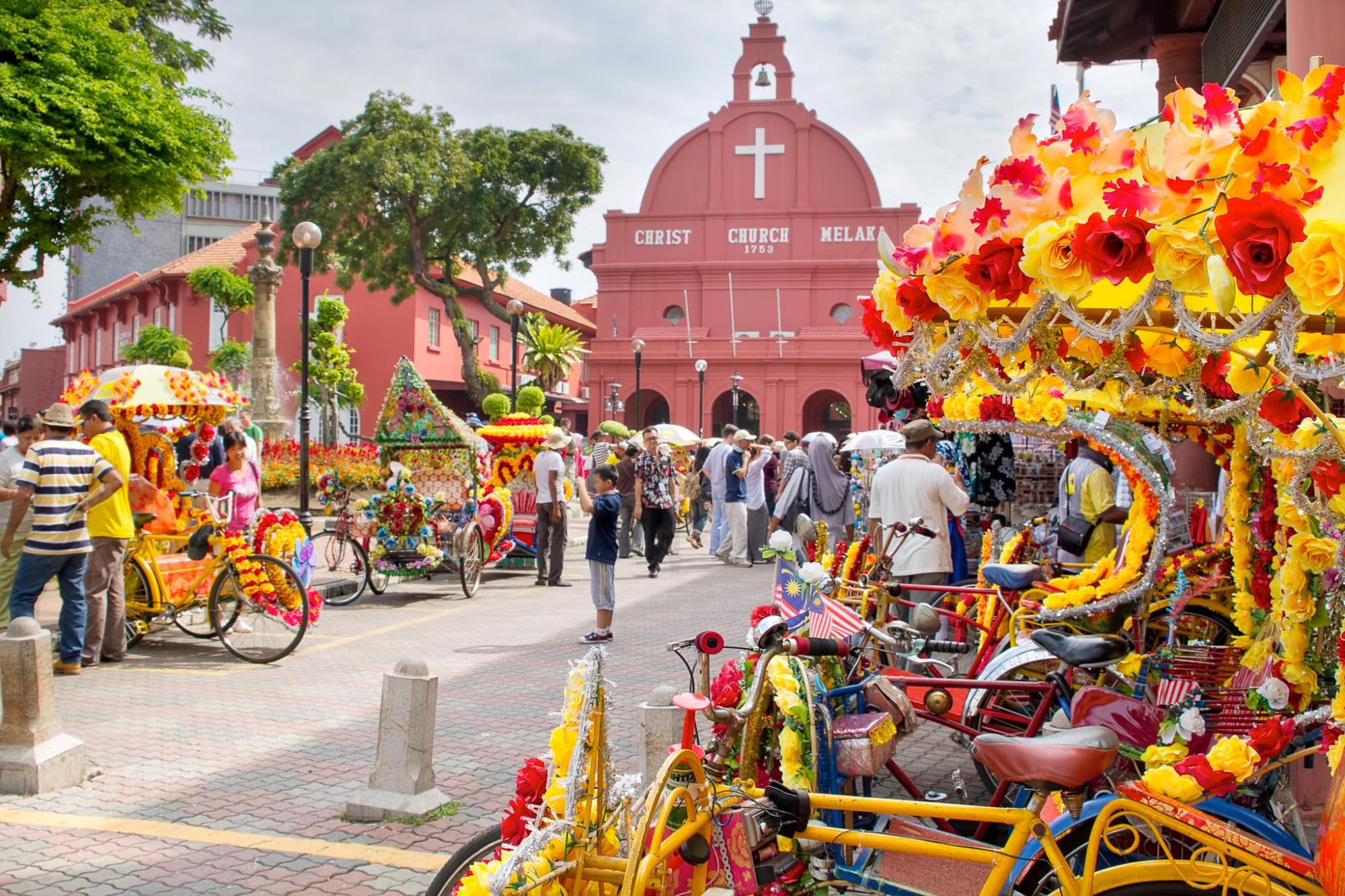
- Malacca: this World Heritage-listed city makes a good overnight trip from Kuala Lumpur.
- Islands: the most popular Malaysian island for visitors is family-friendly Langkawi, while the Perhentian Islands and Tioman Island on the east coast feel more remote.
- Borneo: on Malaysian Borneo, you might consider basing yourself in Kota Kinabalu in Sabah and Kuching in Sarawak.

Essential things to know about Malaysia
Digital arrival card (MDAC)
Most passport holders need to complete the Malaysia Digital Arrival Card (MDAC) before they arrive in the country. It's available to travellers within three days before arrival, usually takes just a few minutes to complete and is free.
Many nationalities are eligible for visa-free entry to Malaysia for stays of up to 90 days, but you should always check your personal circumstances before travelling.
Multiculturalism
Malaysia is a multicultural country, with large Malay, Chinese and Indian populations, along with many other groups. It's common to see mosques, temples and churches sitting close to each other in the same neighbourhood.
When you visit the country, there will be opportunities to learn about these different cultures, including trying their different cuisines. There are also regular cultural and religious festivals throughout the country.
Bahasa Malaysia is the official national language – terima kasih means thank you and tolong means please. English is widely spoken, particularly in Kuala Lumpur and other tourist areas. You may also hear people speaking languages like Tamil, Mandarin and Cantonese.
Local etiquette
To be respectful to locals, there are a few things to keep in mind when it comes to local etiquette:
- Pointing with your index finger is considered rude, so use your thumb or your palm instead
- The left hand is traditionally considered unclean, so try to always use your right hand to eat, hand over items, pay for things or shake hands
- Loud behaviour is often discouraged
- Public displays of affection should be avoided
What to wear
As a Muslim-majority country, dressing conservatively is encouraged in most situations, particularly away from the beaches – although, generally speaking, long shorts and T-shirts are fine for casual activities.
At religious sites, you'll normally be expected to wear tops that cover your upper arms and trousers that cover your knees. Women will need to wear a headscarf in mosques, which may be provided at the entrance.
Removing shoes indoor
Many religious sites will require you to take off your shoes before entering, particularly mosques and Hindu or Buddhist temples. There will normally be somewhere to leave them at the entrance.
If you're invited into a Malaysian home, you should take off your shoes. Some smaller guesthouses or businesses may also request you go shoeless. In these situations, there will usually be a sign and an obvious place for you to leave your footwear.
Payment and tipping
When you visit Malaysia, you will likely use a mixture of credit (or debit) card and cash. Cards are widely accepted in places like malls, hotels and large restaurants, so they're commonly used for larger purchases. But at small businesses like street food or supermarkets, cash might be the only option.
Tipping is not expected in most situations, including taxis and housekeeping. For day tours, it is more common for travellers to show their appreciation with a tip from about RM25 per person.
At restaurants, you can round up the bill or leave some cash as a sign of gratitude. Some restaurants will add a 10% service charge to the bill, although this is uncommon at casual eateries like hawker centres.
Where to eat
Eating your way through Malaysia's diverse cuisine is often a highlight for visitors – and there are lots of places to find good food beyond the standard restaurants.
For street food, there are often small stalls specialising in a very limited number of items, such as boxes of nasi lemak (rice cooked in coconut milk and pandan leaf) or fried bananas. You'll usually find these close to places like train stations or office blocks.
Visitors often find an easier option is a hawker centre, which is a type of food court with seating and multiple vendors. There'll usually be bathrooms, cleaners and a much wider range of dishes than a single street food stall.
Also keep an eye out for night markets (pasar malam) that change locations each evening and have rows of food carts serving snacks and easy meals.
Alcohol consumption
As a Muslim-majority country, alcohol is not as common in Malaysia as some of its Southeast Asian neighbours. But although it's quite heavily taxed, it is legal and easily available in supermarkets, bars and some restaurants.
Visitor permits
To try to protect the environment of Malaysian Borneo, some of the region's top attractions only offer a limited number of permits to visitors each day – and they can book out months in advance. For instance, there are only about 160 daily climb permits for Mount Kinabalu and about 250 daily permits for diving at Sipadan Island.
Other areas like Mulu National Park and Danum Valley Conservation Area also require permits and there is limited accommodation – so it is best to book in advance.
Top things to do when visiting Malaysia
For any visitor, exploring the highlights of Malaysia offers a good mix of cultural and natural experiences:
- Experience the city from the viewing decks of the iconic Petronas Towers and explore the bustling multicultural neighbourhoods
- Venture to George Town, famous for its food scene, where you can try street food snacks or fine dining with a backdrop of heritage buildings and street art
- Head to the sanctuaries in Sabah and Sarawak to see these endangered primates in the wild and learn about the local efforts to protect them
- If you’re feeling adventurous, a two-day climb to reach the summit of the country's highest peak is a popular experience in Malaysian Borneo

Malaysia travel tips: hidden gems
Stepping away from the main sights of Malaysia will give you wonderful experiences with fewer crowds:
- Ipoh: although it's easy to reach from Kuala Lumpur, this city known for its food, art and cave temples feels like it's away from the main tourist trail.
- Perhentian Islands: the crystal clear water, coral reefs and jungle interior make these islands off the east coast feel like a paradise.
- Kuching: the capital of Sarawak is an excellent base to explore the region but also has a lot to offer itself, with a scenic waterfront and excellent museums.
- Gunung Mulu National Park: you can only get to this World Heritage site by small aircraft but you'll be rewarded with a vast rainforest and a massive cave network.

Embrace the diversity
Regardless of where you go when you're visiting Malaysia, you'll find an incredible diversity. Exploring the multicultural neighbourhoods and distinct cuisines are a highlight of the whole country, as are the impressive landscapes and protected reserves. From Peninsular Malaysia’s culture-filled cities and beach-lined islands to Malaysian Borneo’s natural environments and wildlife experiences, wherever you are in the country, you'll find lots to explore.