
8 tips for using the overhead airplane luggage compartment

- Board the plane asap
- Keep their bags close by
- Store essentials under the seat in front
Passengers are increasingly choosing to travel with carry-on bags instead of hold luggage. After all, opting for cabin bags is typically cheaper and more convenient than checking in large cases.
If you’re travelling with larger or additional cabin bags, it’s important to understand the ins and outs of using an overhead plane luggage compartment.
When should you use these compartments, and when should you not? How exactly should you stow your luggage? What if there’s no space left in the overhead locker?
We’ve got the answers to these important questions, plus eight tips on how to use the overhead compartment effectively.
1. Get to know the basics of bin etiquette
Like in any public space, there is plenty of unspoken etiquette when it comes to what to do – and what not to do – on a plane. Dealing with the overhead airplane luggage compartment is no exception, and getting this right can be tricky. Before boarding, it’s worth brushing up on your overhead bin etiquette.
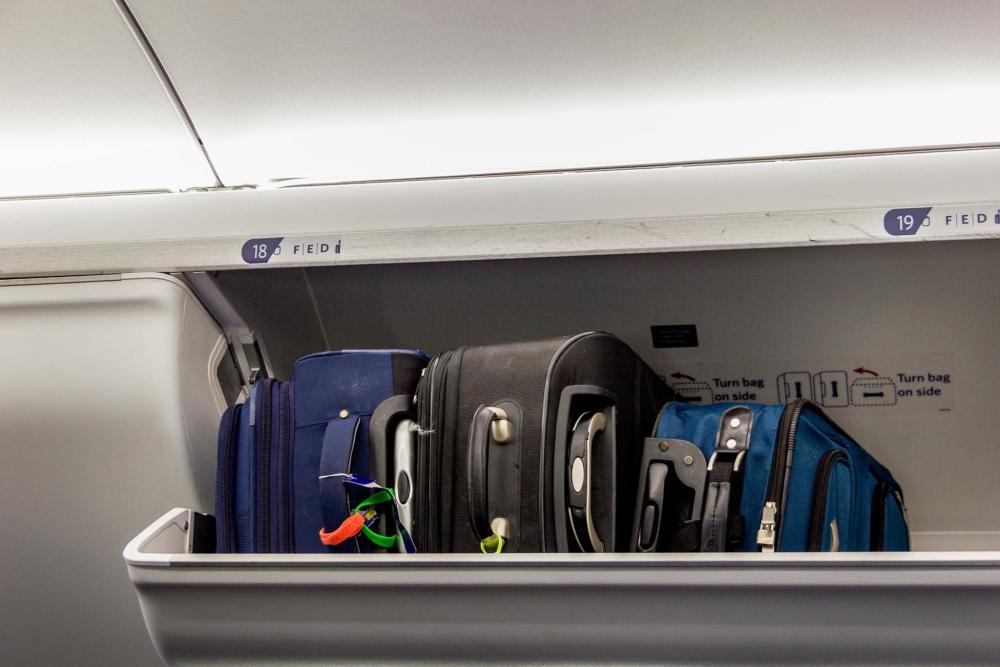
Store wheels first and sideways
When placing your luggage in the overhead compartment, it’s important to leave as much room as possible for other passengers’ bags – especially on busy flights.
To make sure your suitcase isn’t taking up unnecessary shelf space, place it into the locker sideways. Put the wheels on your bag in the compartment first, so the handle is easily accessible upon arrival.
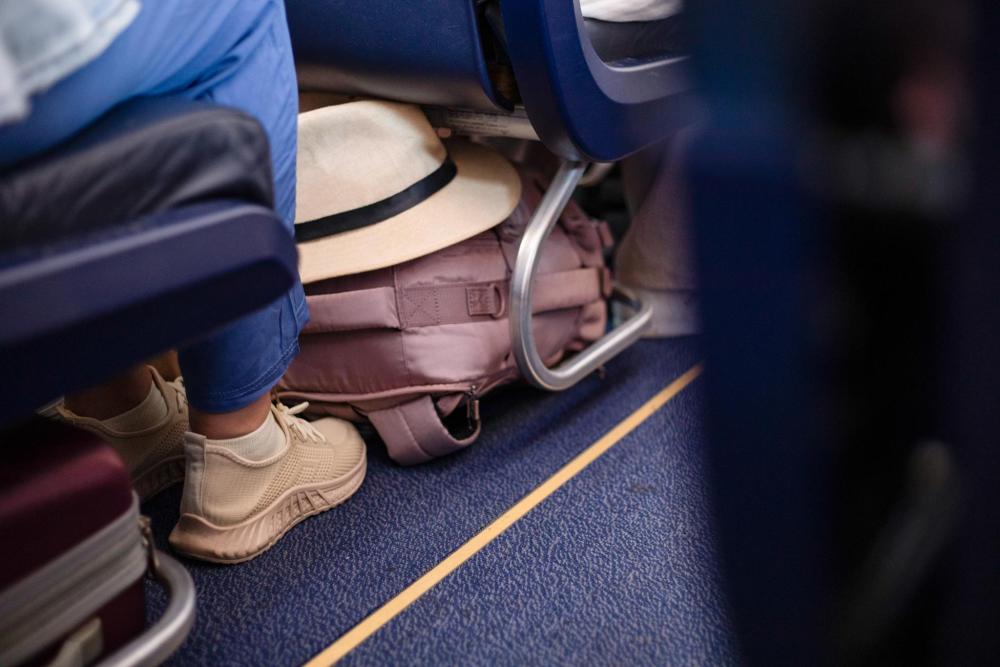
Place smaller items under the seat in front of you
With passengers increasingly opting to travel with carry-on luggage alone, overhead bin space is often scarce, and should be reserved for bigger items. Smaller bags can usually be placed under the seat in front of you – as long as you’re not sitting in an emergency exit row.
Avoid putting open bags or loose items in the overhead compartment
Make sure your bags are securely fastened before placing them in the overhead locker, or the contents may spill out and roll around during the flight.
Where possible, you should also put any loose items – such as duty free purchases – securely in a bag.
2. Board the flight quickly
Getting overhead locker space near your seat can be competitive. This means it’s in your best interest to arrive at your gate on time and board the flight as soon as possible.
Some airlines offer priority boarding alongside extra cabin bag options, meaning you’ll be one of the very first on the plane and don’t have to worry about where you’ll stow your luggage.
3. Use a carry on that fits
This one isn’t quite as easy as it sounds. Different airlines have different policies when it comes to the size and weight of your carry on luggage. Furthermore, some airlines permit larger cabin bags, or extra carry-on luggage on specific fares – but these bags must still fit within specific dimensions. If your cabin bag is oversized, you’ll likely be charged an extra fee.
To ensure your cabin bag is the right size, check the carry-on policy of every airline you’ll be flying with during your trip. If you need to bring a bigger bag, then it’s best to pay for this at the time of booking to avoid a more expensive charge during boarding.

4. Don’t place your bags too far from where you’re sat
For a stress-free flight, it’s best to stow your cabin bags in the locker above your head, and – where possible – under the seat in front of you.
Upon landing, passengers often stand up immediately to retrieve their bags, blocking the aisle. Typically, you’ll disembark from different doors, depending on where your seat is located.
This means that if you’ve stored your cabin bag away from your seat, you may have to wait for all passengers to deplane before collecting it – delaying your onward journey.
The best way to ensure you can secure a convenient spot for your cabin bag is by boarding the plane as early as possible.
5. Know what to do if the bin is full
If the overhead bin above your seat is full, look for options nearby, such as the lockers across the aisle, or slightly to the left or right of your seat.
If there are no nearby options, alert a member of the cabin crew. They will either find a place for your bags in an overhead airplane luggage compartment further away, or – on especially busy flights – stow it in the hold with the checked luggage. If your cabin bag ends up in the hold, you’ll need to collect it from the baggage carousel at the arrival airport.
6. Store essentials under the seat in front of you
Keep the items you’ll need during your flight – your phone, wallet, headphones and book – in a small bag under the seat in front of you. This way, you won’t need to keep getting up and disturbing other passengers (and their luggage) whenever you need to retrieve your things from the hold.
7. Close the compartment properly
If you’re the last person to use the overhead locker, make sure you close the compartment properly – you should hear it click. The flight attendants check that all compartments are securely fastened before takeoff, so don’t worry too much if you’re unable to shut the locker yourself.
8. Ask for help if needed
You may need help putting your luggage in the overhead compartment. If you’re concerned about your ability to lift your bag over your head and place it in the locker, don’t take the risk. Instead, ask passengers nearby to help. Failing that, simply ask a flight attendant.
FAQs
Can you reserve overhead bin space?
With most airlines, on standard economy tickets, overhead bin space works on a first come first served basis. However, a select few airlines do offer reserved overhead compartments, so it’s worth checking during the booking process.
What’s the difference between hold luggage and carry-on bags?
Hold luggage is typically larger than a carry-on bag, and generally costs more to bring, although not always. You hand over your hold luggage at check-in, and then pick it up at the luggage carousel in your destination airport.
Carry-on luggage means any bags you take into the plane’s cabin with you. Each airline has different restrictions for how much carry-on luggage you’re permitted to bring. During the flight, these bags must be stored either in the overhead compartment or underneath the seat in front of you.
How to put luggage in the overhead bin?
Open the overhead bin, lift your bag up and slide it into the locker, wheels first and on its side. This should ensure your luggage isn’t taking up unnecessary shelf space.
Do I have to use the overhead airplane luggage compartment?
It depends on your bags! There’s generally no need to use the overhead luggage compartment if you only have a small carry-on bag that fits easily underneath the seat in front of you without blocking your foot space. However, if you’re sitting in an emergency exit row, you’ll usually be asked to stow all your belongings in the overhead compartment for take-off and landing.