Travelling with pets: pro tips for flying with a cat

To make the journey less stressful for your cat, start acclimating them to their carrier well in advance. Try leaving it open at home with treats or a toy inside. Take your cat for car rides in the carrier to help them adjust to the sensations of travelling.
If you are travelling with your cat, there are several things to arrange before you book your flight.
Some airlines allow cats to travel with you in the cabin or in the hold, while others do not accept pets on particular routes. Airline, plane and destination rules can vary, so confirm the requirements with every airline operating your journey before you book.
Travelling can be unsettling for cats, particularly when they are exposed to unfamiliar people, sounds and surroundings. Whether it’s your first time or you’re a seasoned traveller, we have prepared a few practical tips to help support your cat’s comfort – and your peace of mind.
We’ll cover everything from what essentials to pack to the required documents and how to help your cat stay calm during the flight.
Pre-flight preparations
If you are considering bringing your cat on a plane, there are several steps to take before you book and travel.
Do your research
Selecting the right airline is important when planning to fly with your cat. You'll want to choose an airline that offers clear policies for travelling with pets. Some airlines permit small cats in the cabin if the carrier fits under the seat, while others may restrict cabin travel or require pets to travel in the hold.
Policies can also cover the number of pets allowed, cabin class, breed, carrier dimensions, documents and weather conditions. When booking a flight with your cat, confirm the airline’s policies regarding the carrier, size restrictions, health and documentation requirements, and the pet travel fee for your specific route.
Once you have all the details, you can book your flight accordingly. Reserve your cat’s place as early as possible and ask the airline to confirm the booking.
Invest in a soft-sided, airline-approved carrier
Airlines set their own carrier requirements. Choose a well-ventilated, sturdy carrier that fits the airline’s stated dimensions and can be safely secured under the seat if your cat is travelling in the cabin. A soft-sided carrier may be easier to fit under some plane seats, but it is not automatically accepted by every airline.
Your cat will be in the carrier for hours, so make it cosy:
- Use a soft blanket or fleece bed
- Include a calming item like a favourite toy
- Make sure your cat can stand, sit upright, turn around and lie down comfortably
To make the journey less stressful for your cat, start acclimating them to their carrier well in advance. Try leaving it open at home with treats or a catnip toy inside. Take your cat for car rides in the carrier to help them adjust to the sensations of travelling.
Harness train
If your cat tends to wiggle and squirm out of your arms, using a harness on travel days may be a wise choice.
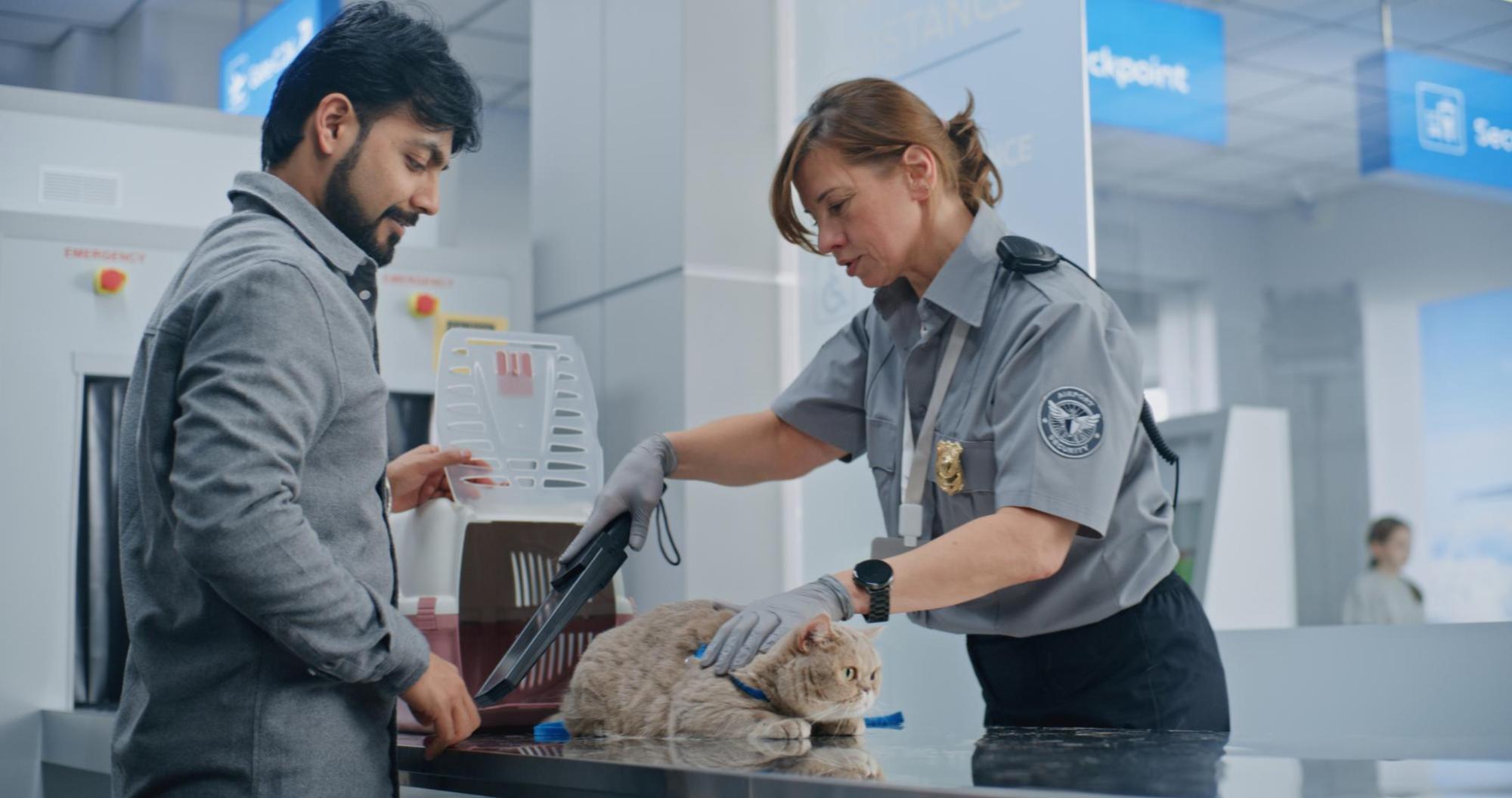
Airport security procedures vary. Some airports may ask you to remove your cat from its carrier during screening, so a harness can help control your cat, ensuring they don’t get spooked and run off.
There is no universal flight-approved pet harness, so follow the instructions of the airport and security authority you are using. Check the procedures at your departure and transit airports in advance and, like the carrier, consider having your cat wear the harness at home before your flight.

5 practical tips for flying with a cat in the cabin
Travelling with your cat can be fun and less stressful, especially if you follow a few practical tips to keep you and your cat comfortable.
1. Arrive at the airport early
Allow time for pet check-in at the desk, going through security with your cat, and ensuring your cat is comfortable before the flight. Find a quiet area to wait for boarding and use this time to check how your cat is doing.
2. Watch their diet before the flight
There is no single feeding or watering schedule that is suitable for every cat or journey. Ask your veterinarian how to manage food and water before, during and after travel, taking the itinerary, possible delays and your cat’s health into account. IATA (International Air Transport Association) guidance for cats travelling in the cabin describes offering a light meal and a short drink approximately two hours before the journey, but your veterinarian and airline’s instructions should take priority.
3. Schedule an appointment with your vet
Book a wellness visit with your veterinarian to ensure your cat is healthy enough to fly and that no issues arise during the flight. Your veterinarian can advise which documents, vaccinations and treatments apply to your route. Requirements depend on the country of departure, destination, transit countries and airline.
Some cats travel without any issues, while others become very anxious and may even vomit. Do not give your cat a sedative or other medication unless your veterinarian specifically advises it.
4. Carry a recent photo and identification details
A few days before your flight, take a photo with your cat and keep it with your travel documents. Include a short description of them (age, colour, breed and distinguished features) and add your contact information to the carrier.
This way, if something happens and your cat is separated from you, you’ll have an up-to-date image and identifying information to share.
5. Keep your cat calm during take-off and landing
Take-off and landing can be particularly stressful for your cat.
To help ease their anxiety:
- Cover the carrier with a light blanket to create a sense of security without blocking ventilation.
- Speak to your cat in a soothing voice.
- Avoid opening the carrier during the flight. If you are concerned about your cat, speak to the cabin crew and follow their instructions.
- Ask your veterinarian whether any calming product is appropriate before using it.

Packing essentials for your cat’s flight
Preparing the right supplies is key to a comfortable journey for your cat.
Here's a list of essentials:
- Collapsible water bowl
- Bottled water
- Comfort items like a favourite blanket or toy
- Leash and collar with ID tags
- Any medication prescribed by your veterinarian, with the relevant instructions
- A carrier that meets your airline’s requirements
- Cat food and treats
- Waste bags, wet wipes and absorbent pads
- Copies of relevant travel documents, vaccination records and your cat’s microchip number
Frequently asked questions about flying with your cat
Are cats allowed in the cabin?
Some airlines allow small cats in the cabin, but policies vary by airline, route, plane and cabin class. If cabin travel is permitted, the carrier generally needs to fit under the seat and your cat needs to fit comfortably inside it. Confirm the airline’s maximum carrier dimensions before booking.
Are there other restrictions on cats in the cabin?
Yes, there are several restrictions to consider regarding flying with your cat:
- Age: minimum-age requirements vary by airline and destination.
- Health: some routes or airlines require a health certificate or other veterinary documentation, with timing rules that vary.
- Carrier size: the carrier must meet the airline’s specifications and fit under the seat if cabin travel is permitted.
- Destination: some countries require specific documents, vaccinations, import permits or quarantine arrangements.
Is there a fee for travelling with your cat?
Many airlines charge a fee for travelling with a cat, but the amount, currency, payment timing and permitted travel method vary by airline and route.International flights can cost more than domestic flights, and fees are typically charged one way.
Is it safe for cats to fly on a plane?
Whether flying is appropriate depends on your cat’s health, temperament, age, the route and the airline’s arrangements. A veterinarian can help you assess the risks and alternatives.
To ensure your cat's welfare:
- Choose a direct flight when possible
- Use a flight-approved carrier
- Visit the veterinarian before flying and ask about any calming aid or medication
- Plan food and water
What should I do if my cat becomes anxious during the flight?
Throughout the flight, monitor your cat's behaviour and comfort level closely. Possible signs of distress include excessive meowing, panting, restlessness, hiding, trembling, vomiting or drooling. These signs can overlap with illness or other problems, so speak to the cabin crew and seek veterinary advice if you are concerned.
If your cat becomes anxious:
- Speak to them softly
- Avoid opening the carrier
- Place a familiar item in the carrier
- Tell the cabin crew if you are concerned about your cat’s condition
Travelling with a cat requires planning, and the right arrangements depend on the individual cat and the journey. Before you book, speak to your veterinarian, confirm the airline’s current pet policy and check the requirements for every country on your route. Your cat’s safety and comfort should be the priority throughout the journey.