
Budget accommodation: 11 tips to find your next best stay

Travelling on a budget? Here are some tips to help you find your next affordable stay:
- If you can be flexible with your dates, staying mid-week (usually Sunday night to Thursday night) can often be cheaper than staying over a weekend
- Avoid peak holiday times – the best times to go are typically the 'shoulder seasons'
- Factor in transport costs and check how long it'll take and how much it'll cost to travel to the places you want to visit
When you’re planning your next holiday, you’ll most likely be keeping one eye on the potential price tag. It's easy to think that travelling always means spending a lot of money, but that doesn’t have to be the case. Figuring out how to travel on a budget is quite doable, and choosing your accommodation wisely is key to managing your money.
Finding the right budget accommodation helps you enjoy your travels without constantly watching your spending. In this guide, we'll share some useful tips for clever booking and look at different affordable places you could stay to help you travel on a budget.
11 tips for booking your next cost-friendly stay
1. Choose budget-friendly destinations
Some locations are more affordable than others. Choosing somewhere with a lower cost of living usually means your whole trip will be cheaper, including your accommodation. It's worth doing a bit of research to find spots that offer good value for money. Even if you're set on visiting a generally expensive country, looking at smaller towns or cities away from the main tourist hotspots often means you'll find cheaper places to stay.
2. Set a budget
Before you start looking at options, figure out what you'll actually be comfortable spending on accommodation each night. Having a clear price in mind will help you focus your search and prevent you from splashing out more than planned. Bear in mind that you’ll need to factor your accommodation cost into your bigger travel budget, alongside things like flights, food, activities and local transport.
3. Plan early for better deals
Booking a place to stay nice and early will often work out better, especially if you're planning a trip during peak times or going somewhere everyone wants to visit. You'll usually find lower prices and a wider range of budget accommodation this way. The real bargains tend to get booked up fast, so try and aim to get your booking sorted a few months beforehand.
4. Travel during the off-season or shoulder season
Being flexible with when you travel is a smart move for saving money, especially if you can avoid peak holiday times. The best times to go are typically the 'shoulder seasons' of spring and autumn. Throughout this period, the weather can still be pleasant, there aren't as many people around, and prices are lower than during the busiest months. It’s worth keeping in mind that accommodation providers often drop their prices when demand isn't as high.
5. Be flexible with your location
Staying within a city centre or next to a major attraction will usually cost more. You may want to consider accommodation in neighbourhoods slightly further out, where comparable B&Bs or apartments may be available for less. It’s also worth checking public transport links and factoring in travel time and cost to make sure the accommodation savings outweigh any extra transport expenses. Sometimes, exploring options in a nearby town can also offer good value.
6. Look for last-minute deals
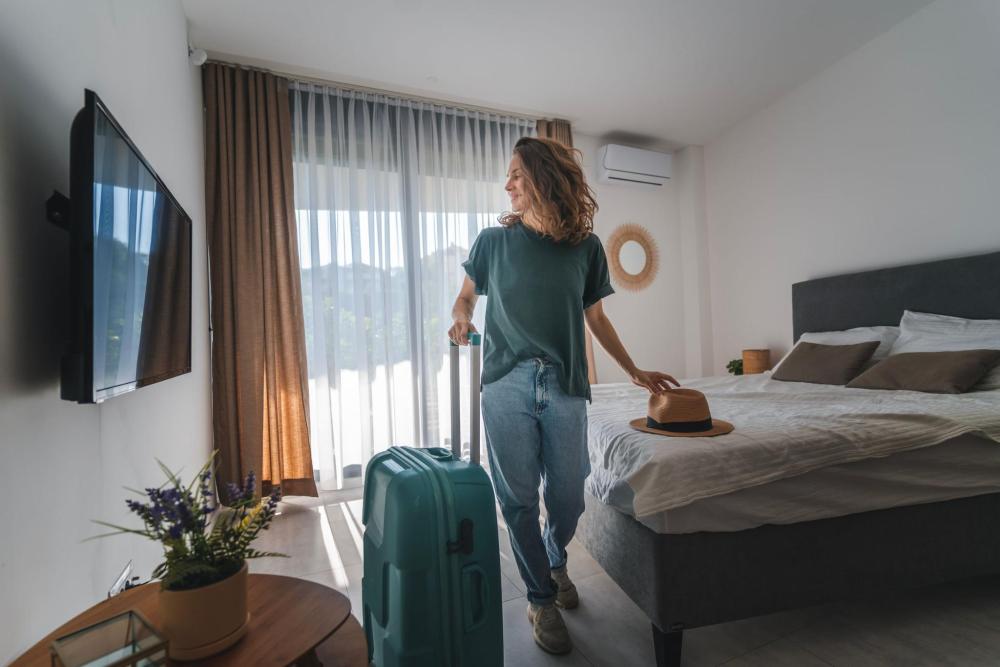
It’s generally best to start planning early, but every now and then, you may stumble across a last-minute bargain as places try to sell off their last few rooms. Doing things this way will be a bit more of a gamble, as there won't be as much availability. However, if you can be fairly flexible about your destination or exactly what you need from your accommodation, checking for deals a week or two before your trip can occasionally save you money.
7. Use filters to narrow your search
Using the filters on Booking.com properly is an efficient way to save time scrolling through places that aren't right for your budget or what you need.
Here are a few filtering options that can help:
- Price per night: to set your maximum budget straight away.
- Property type: narrow down to just B&Bs, homestays, flats, glamping spots or whatever you're after.
- Review score: good for finding places other travellers rated highly.
- Amenities: useful if you know you definitely need things like a kitchen, free parking or somewhere pet-friendly.
- Deals: check specifically for Genius discounts or any other special offers.
8. Consider mid-week stays
If you can be flexible with your dates, staying mid-week (usually Sunday night to Thursday night) can often be cheaper than staying over a weekend. Prices for Friday and Saturday nights tend to be higher simply because that's when more people travel. So, even just shifting your trip by a day or so may mean you save some money.
9. Check reviews carefully
It's worth reading the most recent reviews of a property to get a good idea of what the place is really like. You can keep an eye out for comments on cleanliness, how convenient the location is, noise levels and how helpful the owners or staff were. Remember that just because somewhere is cheap, doesn't automatically mean it's good value.
10. Look at included amenities
It's always a good idea to check exactly what's included in the price. Think about things like whether breakfast is part of the deal at a B&B, or if an apartment has a decent kitchen where you can make some meals. Other things to look for are if Wi-Fi is included, or if bedding is supplied, if you’re booking something like a glamping site. Sometimes, paying a bit more for accommodation that has these key things thrown in can actually save you money overall during your trip.
11. Factor in transport costs
If you're comparing accommodation in a few different locations, remember to factor in how long it will take and how much it will cost to travel to the places you want to visit. An apartment that looks like a great deal may end up costing you more if you're spending a lot each day on transport just to get to the main sights. Make sure to check distances using online maps and do a quick search for local transport prices before you commit.
Budget accommodation types to choose from
Hostels
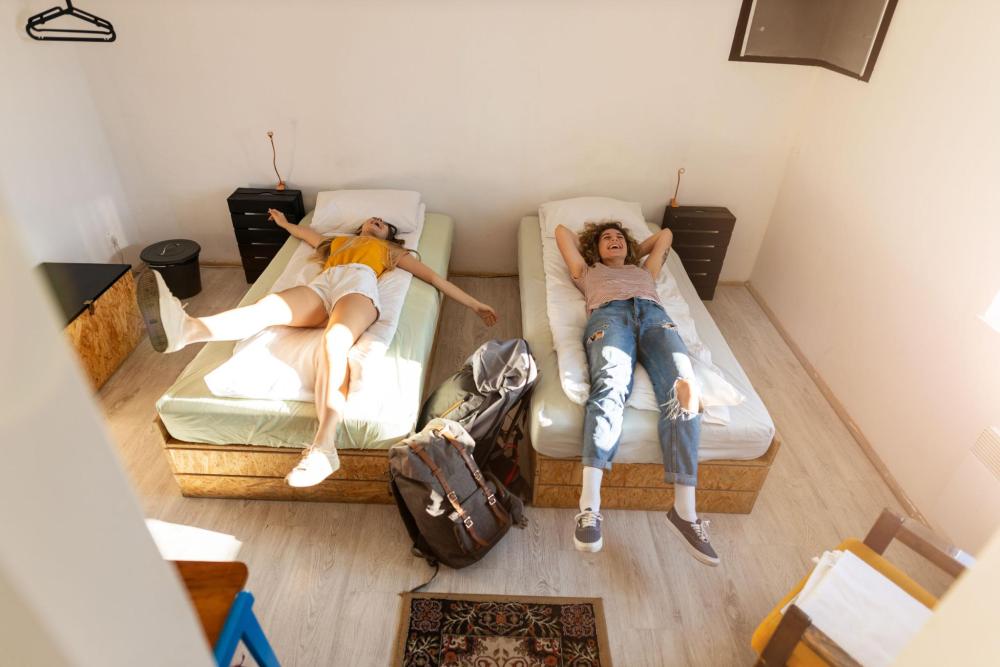
Hostels are often the go-to for budget accommodation. While they're known for shared dorm rooms, typically with bunk beds, and communal areas like bathrooms and kitchens, you'll find that many hostels also have private rooms available these days.
Why it's budget-friendly
Booking a bed in a shared dorm is usually the cheapest way to stay in a hostel, especially if you're travelling solo, as you only pay per bed instead of per room. Most hostels have shared kitchens too, so you can save a fair bit by cooking some of your own meals rather than eating out constantly. On top of that, some may offer a simple free breakfast or have low-cost food options available.
What to expect
You'll find that dorm rooms come in all sorts of sizes, from small ones with just 4 beds to larger ones with 20 or more. There are usuallyThey usually provide lockers for your belongings, but it's worth bringing your own padlock just in case. Expect there to be shared spaces like lounges, kitchens and sometimes bars or games rooms. While you might think hostels are just for young backpackers, you’ll actually cross paths with all kinds of people looking for a budget-friendly stay. If you prefer your own space, private rooms are a good option and still tend to be cheaper than hotels.
Homestays
Staying with a local family in a homestay means you’ll rent a room right in their home. It's a great way to get proper insider tips, like the best spots for food, and really soak up the local culture.
Why it's budget-friendly
For a start, homestays are usually cheaper than hotels and depending on what's agreed, you might be able to use the kitchen. That means you can save money by making some of your own meals. Sometimes, they even throw in breakfast, which is a nice bonus.
What to expect
Room styles vary from simple and basic to cosy and comfortable. The main draw of a homestay is the cultural exchange between you and the owners. It’s often a good fit if you're travelling alone or as a couple and want something more personable than a standard hotel. Just make sure you read the listing properly beforehand so you know the house rules and what areas are shared or just for you.
B&Bs
Bed and Breakfasts (B&Bs) usually feel a bit cosier and have more personality than big hotels. They're often run by the owners who really focus on making you feel welcome, and as the name suggests, breakfast is normally included in the room rate.
Why it's budget-friendly
Although prices vary, B&Bs tend to offer good value, particularly when the included breakfast is taken into account. Since you’ll most likely be dealing directly with the owners, they're usually happy to give you tips on cheaper things to do or places to eat nearby. You’ll get a comfy place to stay, often without paying as much as you would for a hotel.
What to expect
You’ll get your own private room, and most have an en suite bathroom. However, some older properties might have shared ones down the hall. You might also find shared spaces like a lounge or a garden. B&Bs owners will give you your own space but also a bit of friendly chat, so this option can be a nice choice for couples or families who are after a welcoming vibe.

Glamping sites
Glamping (‘glamorous camping’) offers an alternative if you want to get closer to nature without giving up certain comforts. Options include yurts, safari tents, pods, bell tents or even treehouses, which are usually equipped with proper beds and sometimes other home comforts.
Why it's budget-friendly
Glamping can provide a different kind of experience than conventional accommodation, especially in scenic locations and occasionally at a lower price point. While some sites can be on the pricey side, many offer straightforward and cheap options suitable for budget travel. They also give you the chance to have an outdoor experience without necessarily needing to own or transport bulky camping gear.
What to expect
What you get varies a lot from site to site. Some might have shared toilet blocks and simple cooking spots, while more luxurious options could have private bathrooms and a mini-kitchen. It's great if you love the outdoors or just want a slightly quirky getaway. Just remember to check what's actually included – like bedding and towels – before you book.
Holiday homes
Holiday homes include apartments, cottages, villas and entire houses available for short-term rent. They can be a really convenient choice, especially if you're travelling as a family, with a group of friends or planning to stay somewhere for a bit longer than usual.
Why it's budget-friendly
Although the price per night might look a bit higher sometimes, renting a place can actually save you money overall. Having your own kitchen will mean you can cook some meals yourself and cut down on the costs of eating out. If you're travelling with others, sharing the cost of a bigger rental nearly always works out cheaper per head than getting separate hotel rooms. Plus, you usually get more space and useful extras like a washing machine, a balcony or a garden.
What to expect
There's a lot of choice out there, from city centre apartments to cottages out in the sticks. The main plus is you’ll get your own private space and can come and go as you please. Just make sure you check the details about how to get the keys, any extra cleaning fees and exactly what's included (like towels or Wi-Fi).